

The Long Way Round
From a sketch to a finished object — nothing is automated.
Each product prototype from DecoCooly's Resin Collection moves through seven distinct stages before it leaves the workshop. The sequence is fixed. The pace is not. Some stages take an afternoon. Some take weeks. What follows is an honest account of the process.

Idea and sketch
Every object starts with a problem that decoration alone cannot solve. What should this hold? What surface should it anchor? What geometry will look right from three metres away and still reward a close inspection from thirty centimetres?
The idea is written down in plain language before any drawing begins. If it cannot be described in two sentences, it is not ready to become an object.
3D model
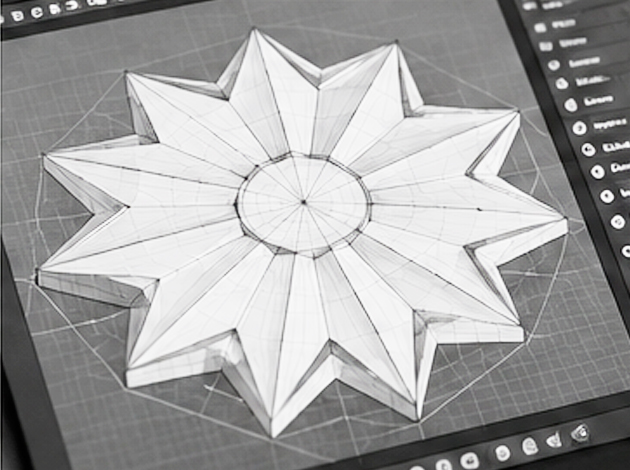
The sketch is transformed into a precise 3D model. Every angle, proportion, and thickness is carefully designed.
This digital prototype allows the form to be refined before production, ensuring that proportions, details, and surfaces are exactly where they should be.
3D print
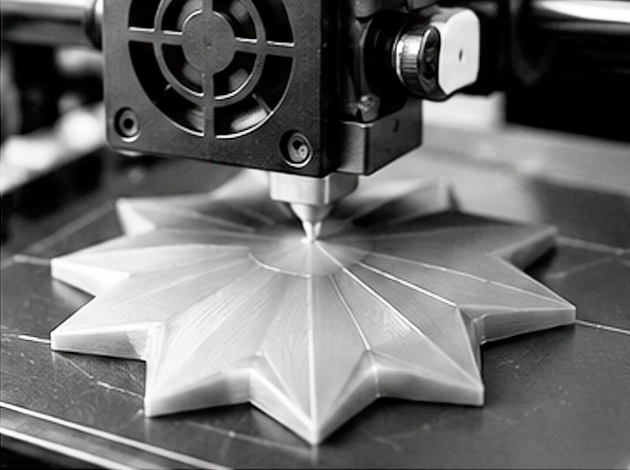
The finished 3D model is translated into a physical master by 3D printing. Layer by layer, the printer creates the form with the precision required for the next stages.
The printed master is then refined and prepared so that its surfaces and details can be transferred accurately into the mold.
Mold
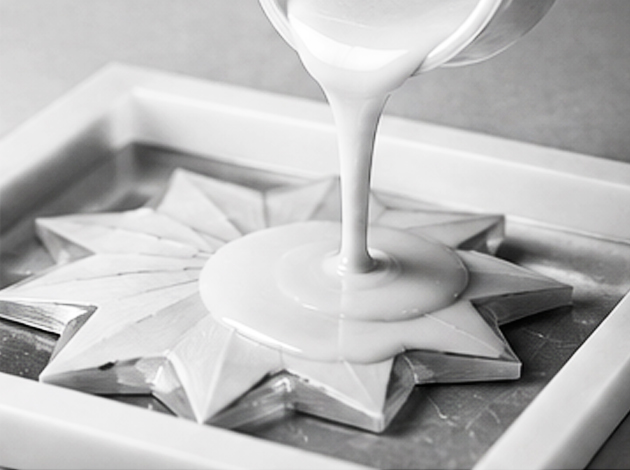
A silicone mold is poured around the master model. The silicone picks up every surface detail at the microscopic level. Mold production takes two to three days including cure time. The mold is then tested before production begins.
Each mold has a limited production life. When the interior begins to show wear — even minor wear not visible in the cast — the mold is replaced. There is no negotiation on this point.
Resin
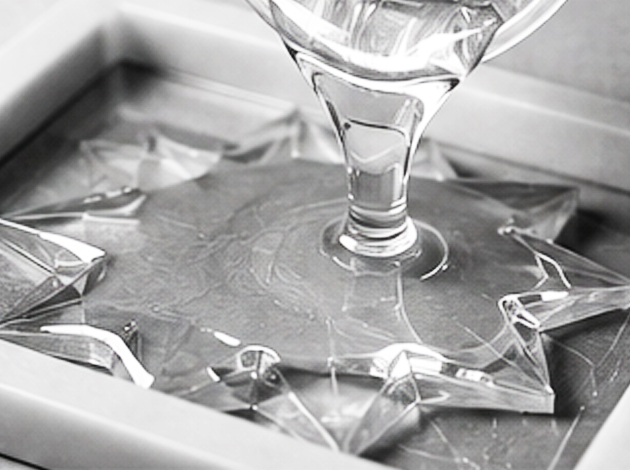
Two-part cast resin is mixed by weight, poured slowly to avoid air entrapment, and left to cure under controlled temperature conditions. The cure time varies by piece geometry — thicker sections cure more slowly and require monitoring.
After demolding, each cast is assessed against the master. Pieces with surface bubbles, incomplete fill, or dimensional variance are set aside and do not proceed. The rejects rate is higher than it looks from the outside.
Assembly
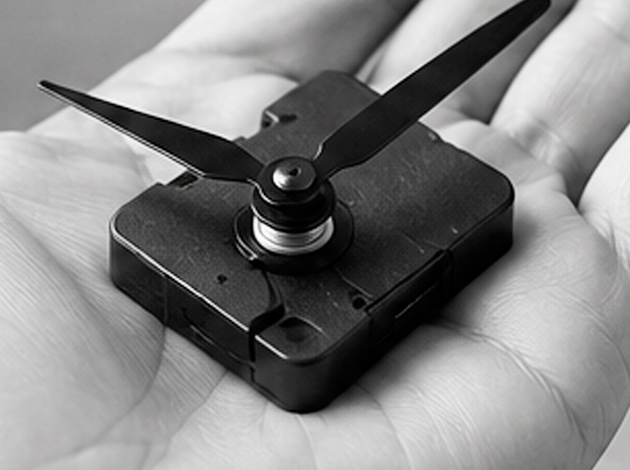
For pieces with mechanical components — clock movements, mounting hardware, weighted bases — these are fitted at this stage. Components are tested for function before assembly and for stability after. Nothing is permanently fixed until the assembly passes inspection.
The majority of DecoCooly objects are single-body casts with no moving parts. For these, the assembly stage is a final structural check: weight distribution, base contact, stability on a level surface.
Final product
The final object is carefully finished and prepared for its journey to you.
From the first line on paper to the finished piece, every DecoCooly product is a combination of design, technology, craftsmanship, and attention to detail.
On Material
Why cast resin.
Cast resin was chosen for a specific reason: it holds geometric precision across the full volume of a piece, not just at the surface. Unlike materials that are carved or pressed, resin fills the mold completely. Every interior dimension is as accurate as every exterior one. For objects designed around geometry, this matters. It also ages in a predictable way — the material does not swell, shrink, or become porous with time under indoor conditions. The finish applied at the Finishing stage holds.